- Jul 15
Boundaries Aren’t Mean — Why Saying No Still Feels So Hard
You rehearse the text three times before you send it.
You say yes, then spend the rest of the day resenting it.
You finally say no, and immediately start explaining, justifying, softening it so no one gets upset.
Then the guilt shows up anyway.
Was that too much? Did I sound cold? Am I being selfish?
Here’s what nobody told you:
Wanting a boundary and being able to hold one are two different skills. Most of us were never taught the second one.
Why Boundaries Feel Like Betrayal
For a lot of women, especially the ones who’ve spent years being the reliable one, the calm one, the one who holds it all together, a boundary doesn’t feel like self-respect.
It feels like letting someone down.
That’s not a character flaw. It’s conditioning.
If you grew up needing to keep the peace, anticipate moods, or earn love through usefulness, your nervous system learned a rule early:
Someone else’s disappointment is dangerous. Prevent it at all costs.
So even now, decades later, a simple no can feel like it might cost you the relationship.
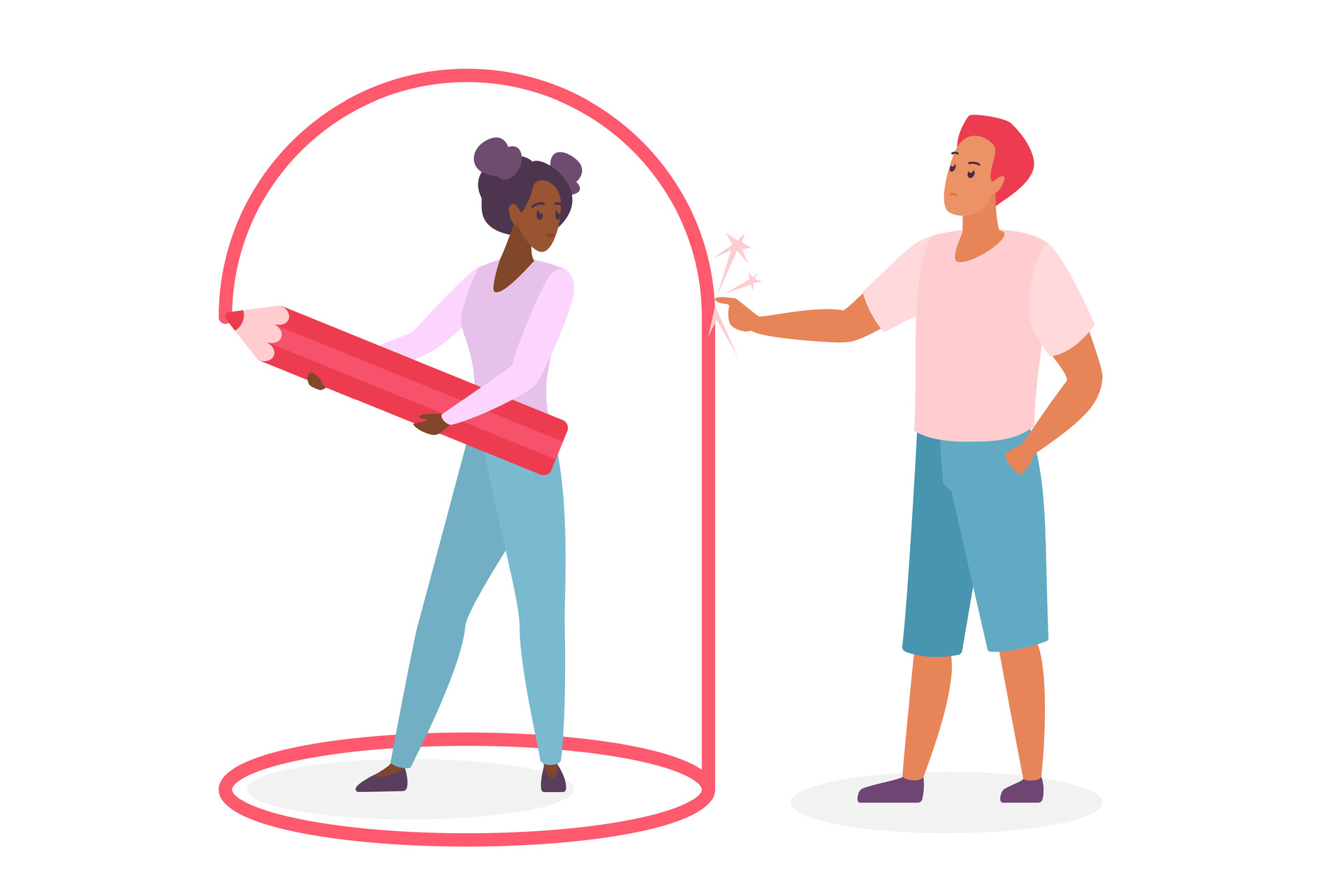
Boundaries Aren’t a Wall. They’re Information.
Somewhere along the way, boundaries got a bad reputation. Cold. Rigid. Unloving.
But a boundary isn’t a punishment you hand someone.
It’s a sentence that tells the truth about your capacity.
I can’t take this on right now. That doesn’t work for me. I need to step away from this conversation.
None of that is cruelty. It’s clarity.
The Real Reason It’s So Hard
It’s not that you don’t know how to say the words.
It’s that saying them means tolerating someone else’s reaction, and you were never given permission to survive that.
So you preempt it. You over-explain. You add three justifications to a sentence that needed none of them.
A boundary stated with a paragraph of apology isn’t really a boundary. It’s a request for permission.
And the moment you’re asking for permission, you’ve handed the decision about your own life back to someone else.
What Holding a Boundary Actually Requires
Not perfect wording.
Not the other person’s approval.
It requires tolerating the discomfort of someone being disappointed in you, without rushing in to fix it.
That’s it. That’s the whole skill.
It might look like:
Saying the sentence once, without re-explaining it three different ways
Letting a silence sit instead of filling it with justification
Noticing the urge to soften a “no” into a “maybe” and pausing before you do
Reminding yourself that someone’s reaction is information about them, not a verdict on you
None of this happens instantly. Your nervous system needs practice believing it’s safe before it stops flinching every time you take up space.
You’re Not Responsible for Managing Everyone’s Feelings About Your Limits
This is the part that changes everything once it actually lands:
You can be a kind person and still say no.
You can love someone and still not have the capacity today.
You can disappoint someone and still be a good person.
Those things were never in conflict. You were just taught they were.
Final Thought
A boundary isn’t you being difficult. It’s you finally telling the truth about what you have to give.
The guilt you feel when you set one isn’t proof you did something wrong.
It’s proof you’re breaking a pattern that kept you small for a long time.
That discomfort fades. What doesn’t fade is what you get back once you stop performing endless availability: your energy, your time, and a life that actually feels like yours.
You don’t have to earn the right to protect your peace.
You just have to stop asking for permission to have it.